


Page 45 - TRADITIONAL-HOUSE-OF-THE-JEBALLI-PEOPLE
P. 45
279

                                 COMPARATIVE ANALYSIS

                 Houses in the area around Salalah in Dhofar, Sultanate of Oman, are built
            very similarly to a Mediterranean building type called the “teza”, and to types
            found in the continental Balkans known as “dubirog” and “kulaca”. A “teza”
            consists of a dry-stone wall approximately 100 cm high, built around a single
            wooden pillar with a rake at the top if it has a circular base. If it features two
            or four columns, it takes an oval shape. Thick branches are placed upon the
            stone wall and the central beam, followed by thinner ones until the roof is
            covered. A “teza” usually has a single door.
                 A “dubirog” is a structure built in the mountainous regions of the Balkan
            Peninsula. Its construction is very similar: first, a low stone wall is erected,
            upon which massive round wooden beams are placed. Smaller branches are
            laid crosswise over this structure, which is then covered with ferns and grass.
            To prevent the roof covering from being blown away by the wind, wooden
            beams are placed on top. A ring of twisted rope is positioned just below the
            ridge, connecting the beams that secure the roof.
                 The “busara” is an even more similar building type with a circular or oval
            base. First, a stone wall up to one meter high is constructed, supporting the
            main massive wooden frame. Cross branches are laid over it, and grass is
            layered on top. The building typically has one or two doors placed opposite
            each other.


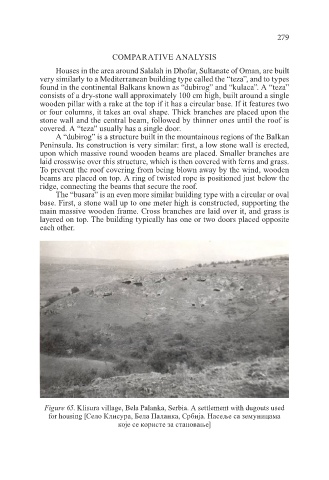
              Figure 65. Klisura village, Bela Palanka, Serbia. A settlement with dugouts used
               for housing [Село Клисура, Бела Паланка, Србија. Насељe са земуницама
                                   које се користе за становање]

