


Page 2 - TRADITIONAL-HOUSE-OF-THE-JEBALLI-PEOPLE
P. 2
236

            housing), and to understand the needs in order to actively participate in shaping
            the future.
                 Our obligation is to study and preserve cultural heritage in architecture.
            In everyday life, it is obvious that there are significant changes in the
            distribution of the population in the Dhofar region, or in the Sultanate of Oman
            as a whole. There is an obvious change in the way buildings are built
            (construction, design, and materials) and in the organization of the house as
            well. The migration from the old to the new house, or from the village to the
            city, leads to the abandonment of old buildings. Losing their function, buildings
            are no longer maintained and disappear quickly. The disappearance of buildings
            also entails the loss of a significant part of the architectural and cultural
            heritage. Therefore, it is necessary to complete field research in the shortest
            possible time, through which the necessary documentation of the traditional
            house of the Jeballi people has to be collected.
                 Therefore, the main research gap lies in the lack of focused investigation
            into the traditional house of the Jeballi people. This paper will analyze the
            traditional houses of the Jeballi people in the area surrounding the city of
            Salalah in Dhofar Governorate. The houses belong to families from the Jeballi
            tribe. The documentation collected during 2017 and 2018, consisting of
            photographs, drawings, and interviews with the owners and builders of the
            houses, will be analyzed. The cave dwellings, houses, and auxiliary buildings
            will be analyzed. The goal is to understand the method of the organization of
            the house, the constructive solutions, and the materials used.


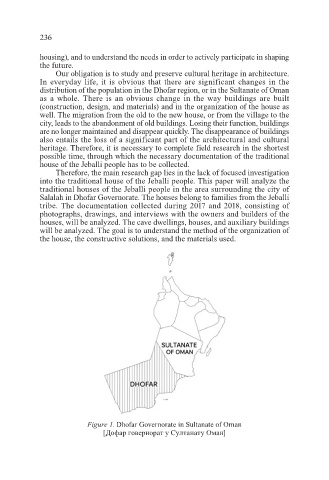
                          Figure 1. Dhofar Governorate in Sultanate of Oman
                              [Дофар говернорат у Султанату Оман]

